
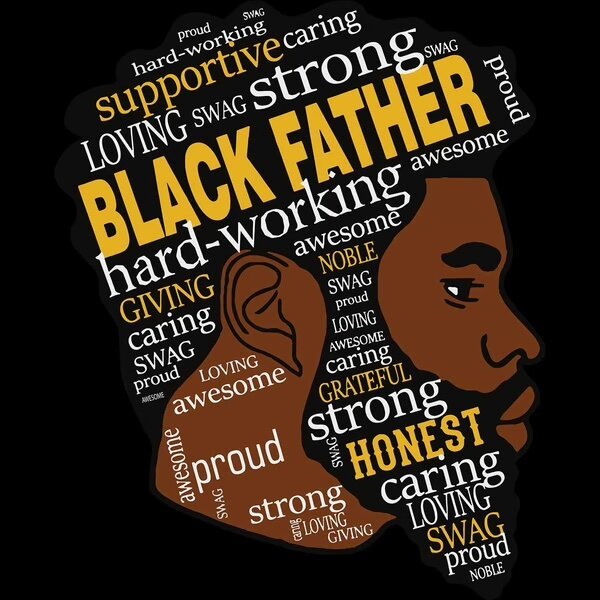
June 2024, New York, NY…, In the early 1900s, men associated Father’s Day as a tribute akin to Mother’s Day and found the idea too effeminate to their liking. In fact, one historian wrote, “They scoffed at the holiday’s sentimental attempts to domesticate manliness with flowers and gift-giving, or they derided the proliferation of such holidays as a commercial gimmick to sell more products—often paid for by the father himself.” Ironically, in 1943, Anna Maria Jarvis (founder of Mother’s Day in the U.S.), after years of crusading to make Mother’s Day a holiday, sought to have the holiday rescinded because of its commercialization.
Interestingly, it was two women, Grace Golden Clayton and Sonora Smart Dodd, who were responsible for making Father’s Day a holiday. In 1908, following a catastrophic mining accident in Fairmont, W. Va., Grace Golden Clayton, the daughter of a dedicated minister, proposed a service to honor all fathers, especially those who had died in the accident. However, very few people outside of Fairmont, W. Va., knew about the observance, and it did not become an annual event.
While attending a Mother’s Day church service in 1909, Sonora Smart Dodd of Spokane, Washington, came up with the idea to honor fathers. Like Clayton, she, too, had been inspired by Anna Maris Jarvis. Sonora’s father, William Jackson Smart, was a farmer, Civil War veteran, and a single parent who raised Sonora and her five brothers by himself after his wife Ellen died giving birth to their youngest child. Sonora convinced the Spokane Ministerial Association and the YMCA to set aside a Sunday in June to celebrate fathers. She proposed June 5, her father’s birthday, but the ministers chose the third Sunday in June so that they would have more time after Mother’s Day (the second Sunday in May) to prepare their sermons. Thus, on June 19, 1910, the first Father’s Day events commenced. Sonora delivered presents to disabled fathers; boys from the YMCA decorated their lapels with fresh-cut roses (red for living fathers, white for the deceased), and the city’s ministers devoted their homilies to fatherhood. The widely publicized events in Spokane struck a chord that reached all the way to Washington, D.C., and Sonora’s celebration put the idea on the path to becoming a national holiday.
The holiday, however, did not catch on right away, perhaps due to the perceived parallels with Mother’s Day, which was couched in terms of femininity. In 1914, President Woodrow Wilson called Mother’s Day a way to recognize “that tender, gentle army—the mothers of America.” Men viewed the idea of Father’s Day similarly to Mother’s Day, which was popular with florists and didn’t have the same sentimental appeal. There were several failed attempts to make Father’s Day a national holiday. It was not until 1972, under President Richard Nixon, that Congress passed an act officially making Father’s Day a national holiday. (Six years later, Sonora died at age 96.)
The modern role of the father has changed so that mothers and fathers are partners, each taking more responsibility within family life.
Black fathers, however, continue to be perceived negatively. “The truth is Black fathers have received a tainted reputation, especially in the media, brought to the forefront by the social inequities the Black community continues to face. So many good, honest, hardworking, loving Black dads do not receive the recognition and positive attention they rightfully deserve. So many are stereotyped as being absent fathers who do not care about raising their children and being a part of the family unit,” wrote Ahndrea L. Blue, Founder of Making a Difference Foundation in a 2020 essay. “We want to help break the myths of the absentee father in Black communities.” She also listed the top five myths regarding Black fathers.
Myth #1: Unmarried Black parents mean a child is fatherless: Oftentimes, the statistics presented count single Black mothers and correlate that to absent fathers. In many cases, this is not true. Just because the parents are not married does not mean the father is not in the picture and is not interacting with his child. According to the Centers for Disease & Prevention Control (CDC), “Most Black fathers live with their children. There are about 2.5 million who live with their children and 1.7 million who don’t.”
Myth #2: Black fathers are less involved with parental duties or raising their children. Black dads who live with their children are, on average, actually more involved than their counterparts, according to a CDC study. In fact, according to a report by the National Center for Health Statistics, Black fathers are more involved with their younger children, feeding, bathing, and dressing, reading to, and playing with them daily. For older children, Black fathers are also more likely to help with homework and talk to their children about their day.
Myth #3: Black fathers do not want to own up to and handle their parental responsibilities. Unfortunately, what the data rarely shows is that many black fathers cannot live up to their responsibilities. Why? Because there is a larger number of black men than other races who are taken away from their families through death – whether by natural causes, accidents, or by violence. In addition, a disproportionate incarceration of black men than other races put fathers in jail only to leave children fatherless.
Myth #4: Many Black fathers do not provide for their children: Black dads want to provide for their children, not only with their time, but also with financial means. However, for so many, the system is set up against them. There is still an income gap for Black workers vs. their white counterparts. When Black men make lower incomes, this can affect their ability to support their children. If they miss child support payments, they risk many consequences that make it even harder to meet their obligations to their kids. Low pay, loss of a job, loss of their license due to lack of court-ordered payments, the system highlights the numerous inequities that still make it hard for Black fathers to be there for their children.
Myth #5: The issue of father absenteeism is a cultural problem solely within the Black community. Yes, there are problems with missing fathers within the Black community, but it isn’t just their problem. Fatherlessness crosses over each race demographic and has been on the rise in white and Latino communities as well. And making it all about one race only pushes a false narrative that hurts that community by continuing the inequities and injustices they face.
Ahndrea L. Blue started the Making a Difference Foundation in 2003 “with the core value that everyone has the capacity to serve and make a difference in someone’s life.” The Foundation works closely with Black communities and communities of color and sees so many amazing fathers and father figures. These fathers work hard every single day doing what needs to be done, oftentimes despite the challenges they face in today’s society. It is not unique but normal despite the lies and the derogatory myths that are being perpetuated.
“This Father’s Day, let’s break stereotypes and bust myths. Fatherhood does not have a skin color.” – Ahndrea L. Blue
Source References: Ahndrea L. Blue|Making A Difference Foundation; Goggle; Wikipedia.