

June 2025, New York, NY… June holds deep biblical significance, symbolizing growth, love, and community connections. The month encourages exploration of personal faith and relationships, aligning with the themes found in the Bible. It also features several biblical events, chief among them being Pentecost, 50 days after Easter, when the Holy Spirit descended upon the apostles, empowering them for ministry. This year, Pentecost Sunday falls on June 8th.
June is also the beginning of summer and signifies new beginnings, mirroring themes of growth and renewal found in scriptures like Isaiah 43:19. Couples like to marry in June, reflecting the biblical principles of love, commitment, and family unity, as highlighted in Ephesians 5:25-33.
Juneteenth and Father’s Day are also celebrated during the third week in June. Juneteenth (short for “June Nineteenth”) marks the day when General Order No. 3 was read aloud by Union Officer, Maj. Gen. Gordon Granger in Galveston, TX., informing Texans that all enslaved people in the state were free. Juneteenth became an official holiday in 2021. Civil Rights activists, religious leaders, and politicians across the country applauded the bill’s signing.
In an essay entitled When Peace Come: Teaching the Significance of Juneteenth, Shennette Garrett-Scott wrote: “The holiday makes room for people of all backgrounds to celebrate what is unique about their culture and experiences while pushing America to make social justice a living reality for everyone. Juneteenth endures as an acknowledgement of both the failures and the promises of America.”
According to the Pew Research Center, while every state has at some point recognized Juneteenth as a day of observance, 26 states have yet to adopt Juneteenth as a paid public holiday, including seven former Confederate states.
The physical chains of slavery have been removed, however, as Smithsonian Institution Secretary Lonnie Bunch observed, “emancipation is a process that is still unfolding—not simply a day or a moment of jubilee.” And the residual effects of slavery still exist. Our civil rights, voting rights, and women’s reproductive rights are being systematically stripped away. Discriminatory housing and hiring practices still exist. Affirmative Action has been struck down, and Diversity, Equity, and Inclusion (DEI) programs are being dismantled.
President Lyndon B. Johnson issued a proclamation recognizing Father’s Day in 1966, and in 1972, President Richard Nixon signed legislation designating the third Sunday of June as Father’s Day.
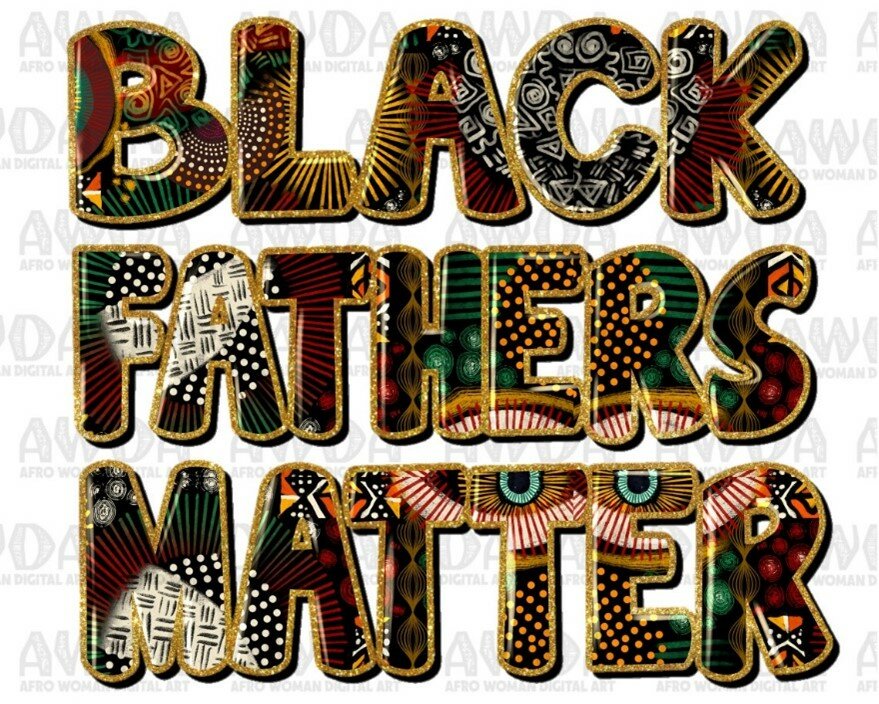
Father’s Day celebrates fatherhood. Black fatherhood, however, continues to be perceived negatively. “The truth is Black fathers have received a tainted reputation, especially in the media, brought to the forefront by the social inequities the Black community continues to face. So many good, honest, hardworking, loving Black dads do not receive the recognition and positive attention they rightfully deserve. So many are stereotyped as being absent fathers who do not care about raising their children and being a part of the family unit,” wrote Ahndrea L. Blue, Founder of Making a Difference Foundation, in a 2020 essay. “We want to help break the myths of the absentee father in Black communities.” She also listed the top five myths regarding Black fathers.
Myth #1: Unmarried Black parents mean a child is fatherless: Oftentimes, the statistics presented count single Black mothers and correlate that to absent fathers. In many cases, this is not true. Just because the parents are not married does not mean the father is not in the picture and is not interacting with his child. According to The Center for Disease & Prevention Control, (CDC), “Most Black fathers live with their children. There are about 2.5 million who live with their children, and 1.7 million who don’t.”
Myth #2: Black fathers are less involved with parental duties or raising their children. Black dads who live with their children are, on average, actually more involved than their counterparts, according to a CDC study. In fact, according to a report by the National Center for Health Statistics, Black fathers are more involved with their younger children, feeding, bathing, dressing, reading to, and playing with them daily. For older children, Black fathers are also more likely to help with homework and talk to their children about their day.
Myth #3: Black fathers do not want to own up to and handle their parental responsibilities. Unfortunately, what the data rarely shows is that many black fathers cannot live up to their responsibilities. Why? Because there is a larger number of black men than other races who are taken away from their families through death, whether by natural causes, accidents, or by violence. In addition, Black men are disproportionately incarcerated compared to other races.
Myth #4: Many Black fathers do not provide for their children. Black dads want to provide for their children, not only with their time, but also with financial means. However, for so many, the system is set up against them. There is still an income gap for Black workers vs. their white counterparts. When Black men make lower incomes, this can affect their ability to support their children. If they miss child support payments, they risk many consequences that make it even harder to meet their obligations to their kids. Low pay, loss of a job, loss of their license due to lack of court-ordered payments, the system highlights the numerous inequities that still make it hard for Black fathers to be there for their children.
Myth #5: The issue of father absenteeism is a cultural problem solely within the Black community. Yes, there are problems with missing fathers within the Black community, but it isn’t just their problem. Fatherlessness has been on the rise in white and Latino communities as well. And making it all about one race only pushes a false narrative that hurts that community by continuing the inequities and injustices they face.
Anhdreda L. Blue started the Making a Difference Foundation in 2003. The Foundation works closely with Black communities and communities of color and sees so many amazing fathers and father figures. These fathers work hard every single day doing what needs to be done, oftentimes despite the challenges they face in today’s society. It is not unique but normal despite the lies and the derogatory myths that are being perpetuated. “This Father’s Day, let’s break stereotypes and bust myths. Fatherhood does not have a skin color.”
“What it meant to be a newly freed Black man and a father in 1865 mirrors what it means to be a Black man and a father today: providing for and protecting your family, nurturing your children’s sense of self-worth and identity, defying stereotypes, resisting oppression, keeping the faith, and reckoning with the understanding, as Smithsonian Institution secretary Lonnie Bunch observed, that emancipation is ‘ process that is still unfolding—not simply a day or a moment of jubilee.’” — Johnathon Briggs, National Urban League.
Reference Sources: Google Search – Myths About Juneteenth, Madge Allen, April 1, 2021; Association for the Study of African American History (ASLAH); Bible Chronology.